From Seaweed Podcast to Kelp Planter
How a weekend experiment became a high-performance product

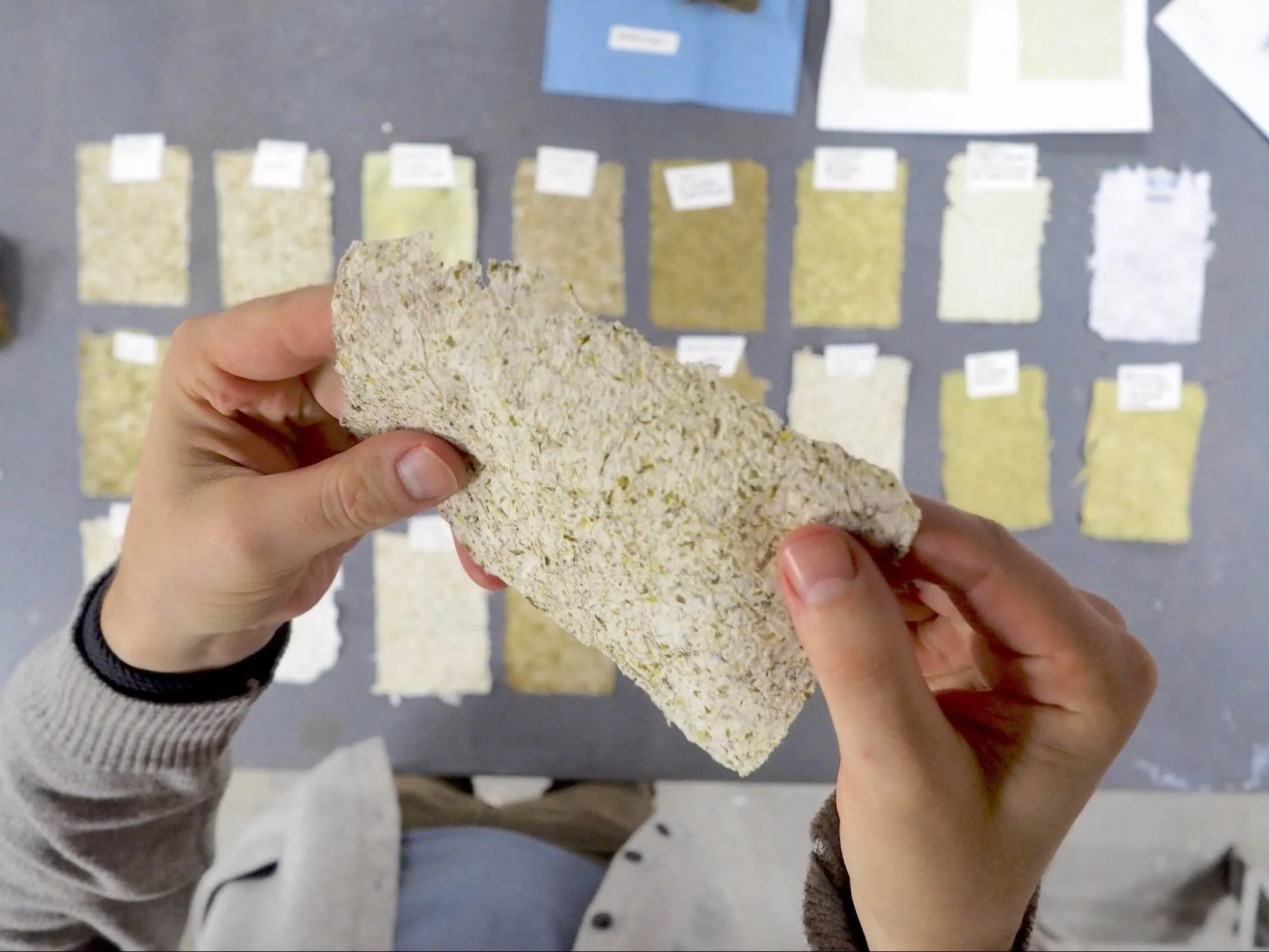
A case study in commercialization. We show how our process of rapid prototyping, in-house R&D, and techno-economic modeling turned a material without a market into a data-backed, high-performance product.
It Started With a Podcast and a Problem
In 2020, we were listening to a lot of podcasts.
We heard Bren Smith from GreenWave talking about a huge surplus of farmed kelp. We heard Julia Marsh of Sway talking about low-intensity material processing.
At the same time, a massive Sargassum bloom was in the news, and we had just learned that Mohawk Papers, a specialty paper manufacturer near us in New York, had lost two of their sustainable product lines due to pandemic supply chain disruptions.
The connection seemed obvious. Too much seaweed, not enough sustainable paper ingredients. We could solve both with a new kind of paper.
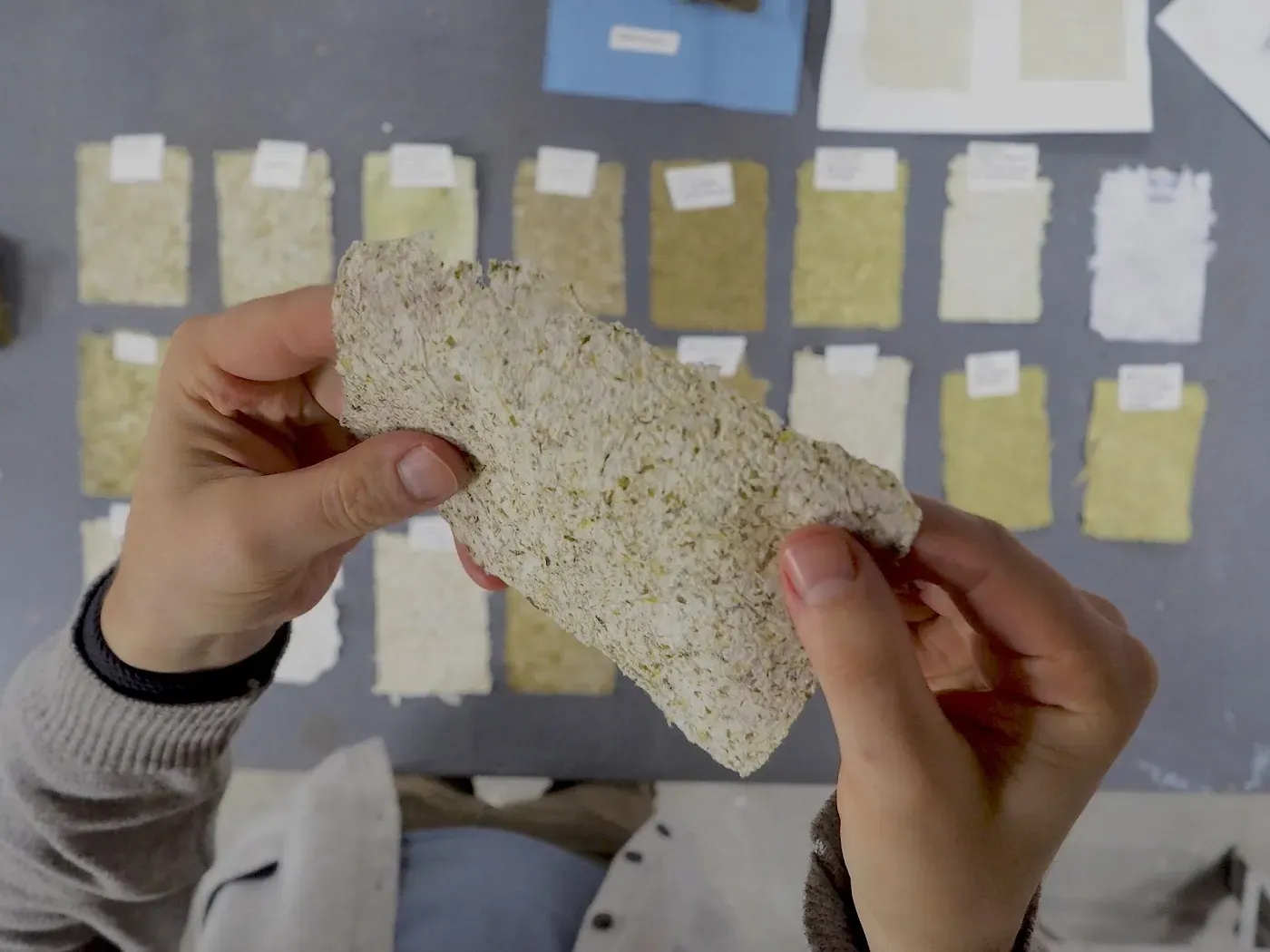
Seaweed paper developed by Fun Stuff Design and Keep Earth Co. Photo: Fun Stuff Design.
So, we sourced some kelp from GreenWave and started making paper.
It was beautiful, tactile, and promising.
With a handful of samples, we pitched it to Mohawk. They said cool, but no. They were already deep in the process of developing a different sustainable paper line, and didn’t think they could sell it to enough of their current customers to justify their (rather large) minimum order quantity.
Without a market it was a cool experiment without a customer. All too familiar in material innovation.
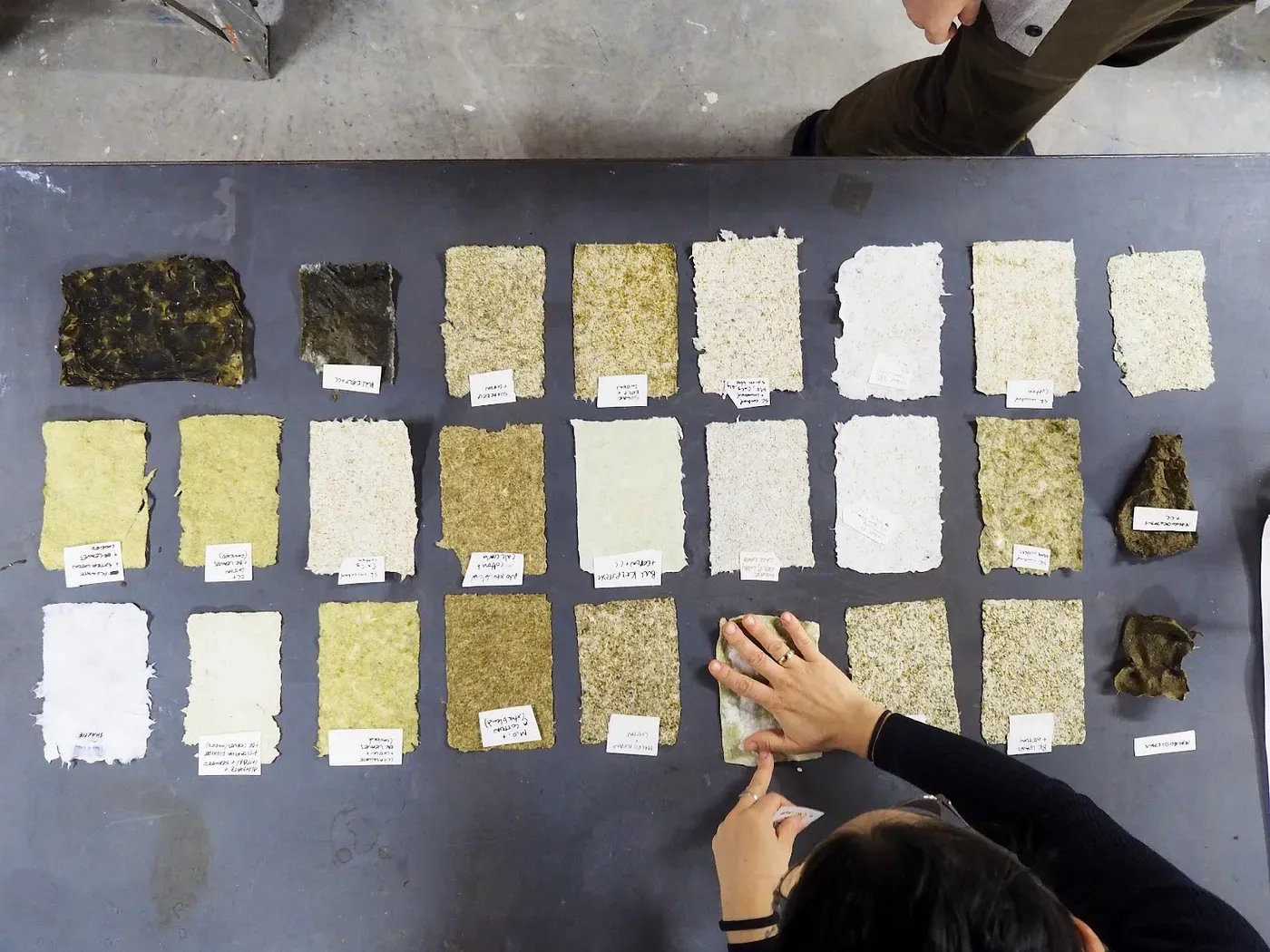
A range of paper sheet prototypes with seaweed inclusions. Photo: Fun Stuff Design.
The Pivot to Storytelling Objects
The project went on the shelf. Then, we got a call from James Dillard at Macro Oceans.
He didn’t need paper, he needed charismatic packaging for his trade show booth-something to make the potential of their seaweed ingredients tangible. He also had a lot of seaweed biomass that was leftover from the extraction process. It was a full circle storytelling opportunity for a seaweed ingredient company.
He didn’t want miles of paper, he just wanted a dozen or so well-made packaging samples.
Without a paper manufacturer, producing the stock for boxes didn’t make sense, so we pivoted from 2D paper sheets to 3D molded pulp.
The problem? The tooling for molded paper pulp is complex and expensive. This was a product that would never go into production, and therefore could never justify the costs. The small-run nature of this work was what made it valuable.
This is where our in-house R&D and rapid prototyping process came in. We got to work 3D-printing our own molded pulp tooling and building a custom paper pulp vacuum molding system that we could operate ourselves.
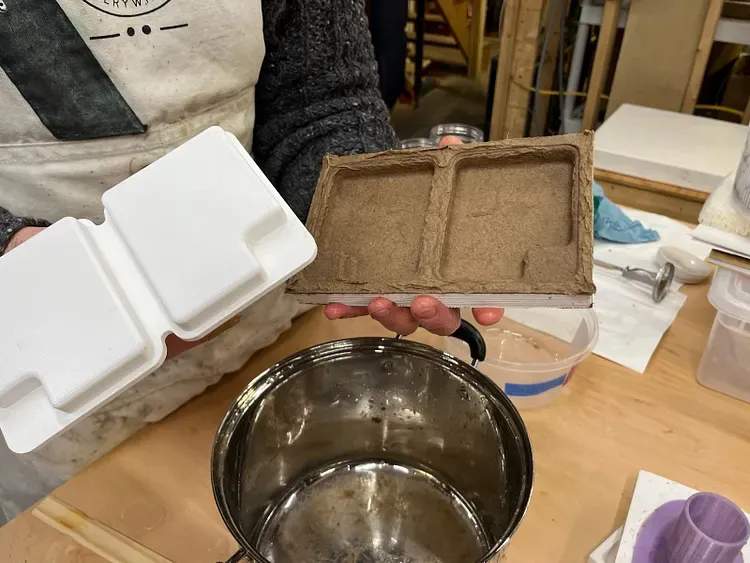
Molding paper pulp packaging prototypes. Photo: Fun Stuff Design.
The ‘Clogging’ Problem (And Our Solution)
Our first 3D-printed tools were a disaster. They clogged instantly. We used a 3d printed lattice design that looked great in CAD, but didn’t work in practice. We tried again. This time, the pulp didn’t stick to the walls. The lattice pores were too large for the pulp.
The solution was a new lattice design: dense on the contact surface (for a smooth finish) but loose and open everywhere else for rapid drainage.
WIth some experimentation and integration, it worked.
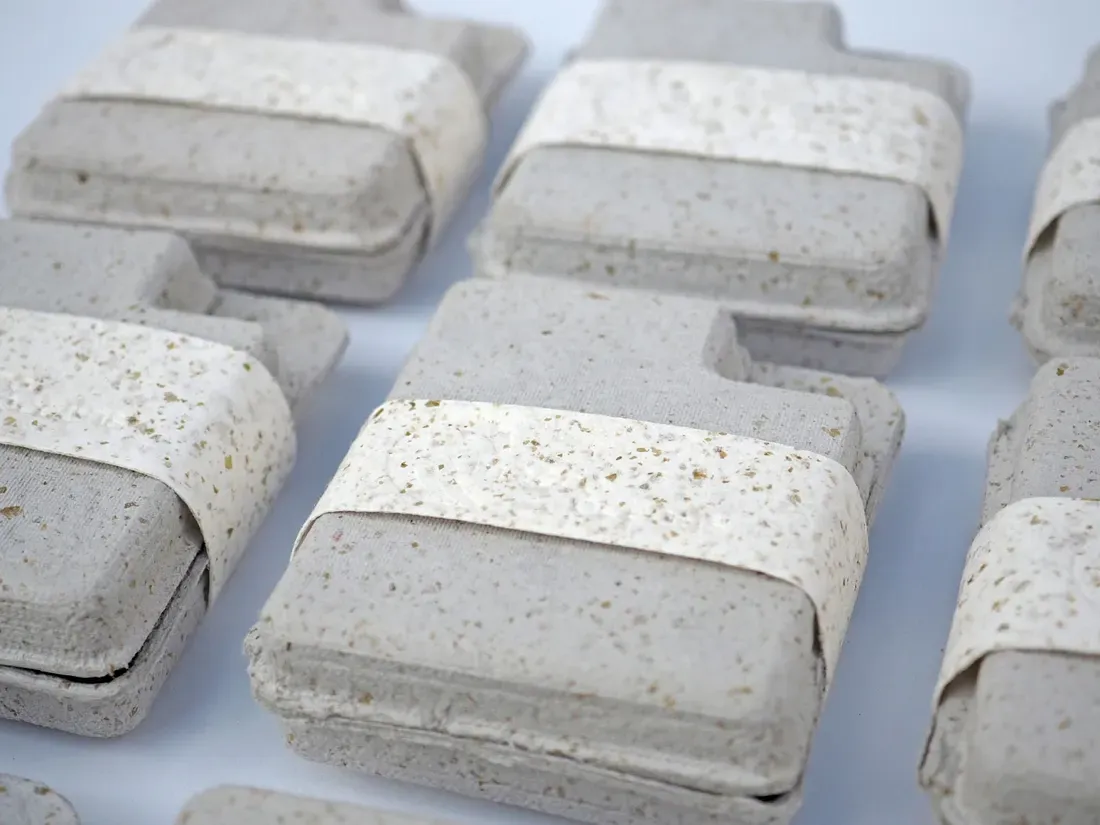
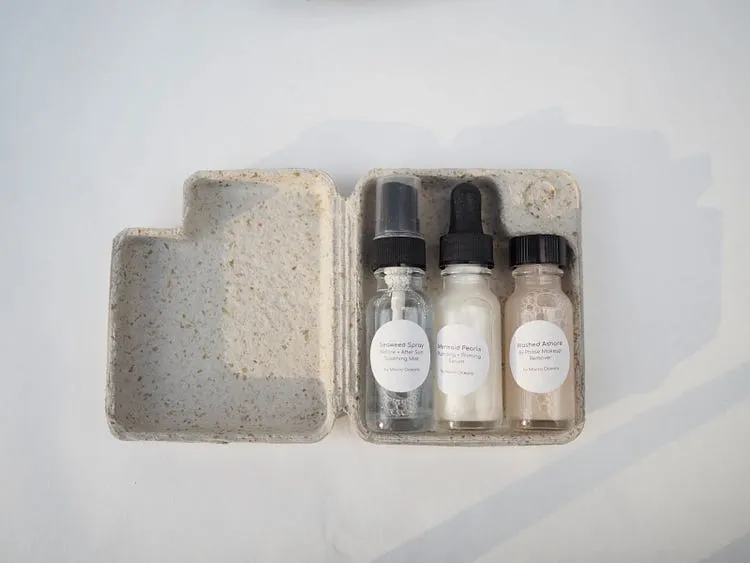
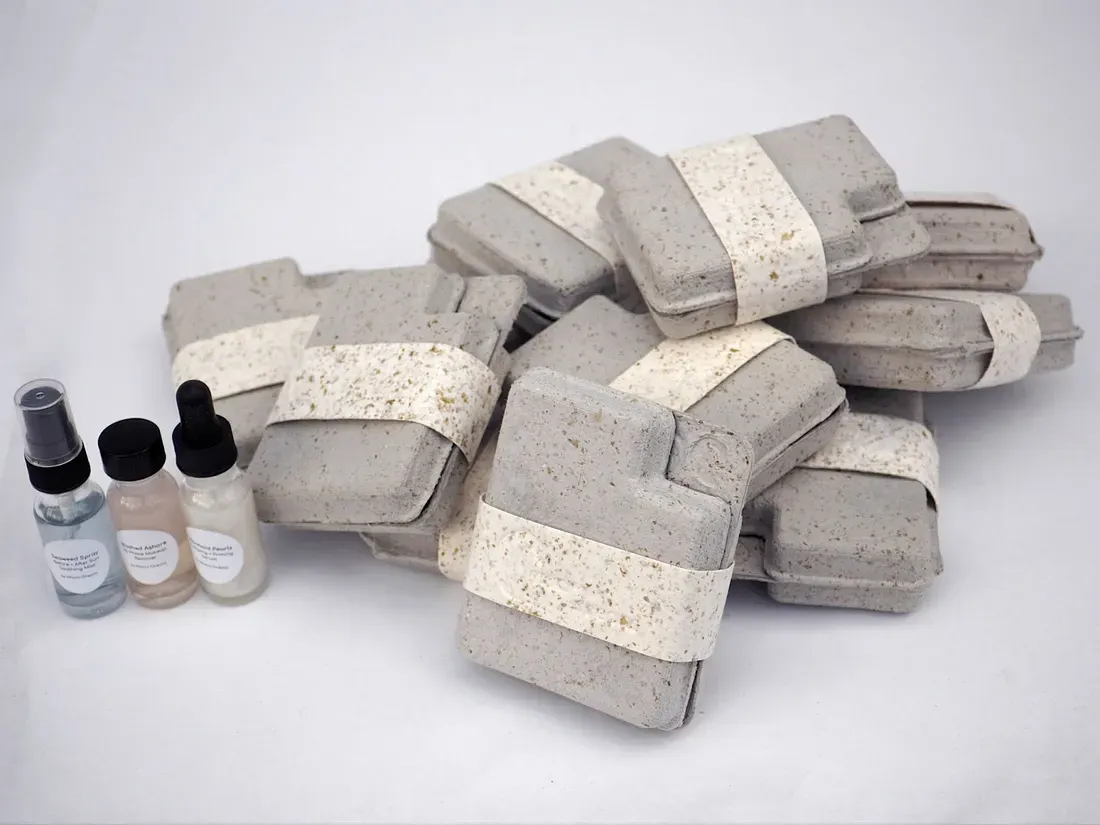
Seaweed paper packaging prototypes for Macro Oceans. Photo: Fun Stuff Design.
The packaging was successful, but it still wasn’t a scalable business. It generated interest from some of the beauty and personal care brands that Macro Oceans sold to, but ultimately, we ran into the same problem as before; these smaller brands didn’t have the volume to justify a production run.
We had a great process, but not a commercial product.
The Real Ah-ha: Data > Vibes
Here’s where it all clicked. The final, critical connection came from James, who introduced us to an entrepreneur named Emily Power, who was starting a company named Ocean Made. She wanted to create a better planter pot, and like us, wanted to do it with seaweed.
The challenge was with the classic bio-pot — a bio-based planter pot made with peat moss or coconut fiber (coir). While the peat moss planters have issues around sustainability-peat moss is a non-renewable resource, and a major carbon sink-the real problem was more practical.
Part of the promise of bio-pots is that they are biodegradable. They won’t pollute farms and gardens with plastic, and ideally, they can be planted right into the ground along with the plant.
The problem is that the existing pots didn’t break down fast enough. The plants would grow, and eventually run out of space, becoming root-bound, which slows growth. Not ideal.
This is what Emily wanted. A bio-based planter that did its job, then could be planted right into the soil and disappear fast enough that it didn’t hurt the plants.
Seaweed is still expensive
At first we talked about how to create a seaweed bioplastic. But from experience with other seaweed based products, we knew that the prices of seaweed had the potential to make the product unaffordable. But we had an idea that could offset the cost.
Designing for cost parity
Recycled paper is one of the cheapest materials out there, costing quite a bit less than virgin tree pulp, and through all of this paper-making, we had a fair bit of experience working with it.
So we assembled a techno-economic model. On one corner we had biopots made from coconut coir and peat moss, and on the other a seaweed-paper pot. We simulated different seaweed feedstocks and different grades of paper, to find an ideal mix that maximized seaweed content while hitting price parity, even calculating the micronutrients in the seaweed and what effect they might have on the growing plants.
Then we looked at sizes, weights, shipping density — how many could fit onto a pallet and then into a container or a truck trailer, plus shipping costs. This gave us a framework for size, weight and shape, so we would be sure they would pack and ship efficiently, and that we wouldn’t be losing margin on unused space. It’s all about imagining the key processes and doing the math on economic viability.
This gave us a framework to build a market-viable product.
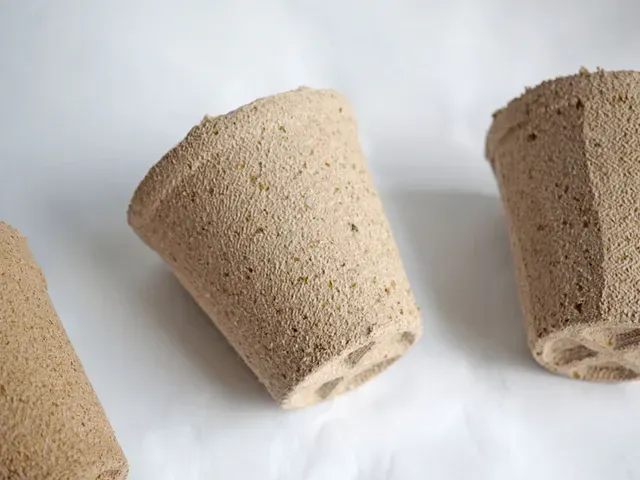
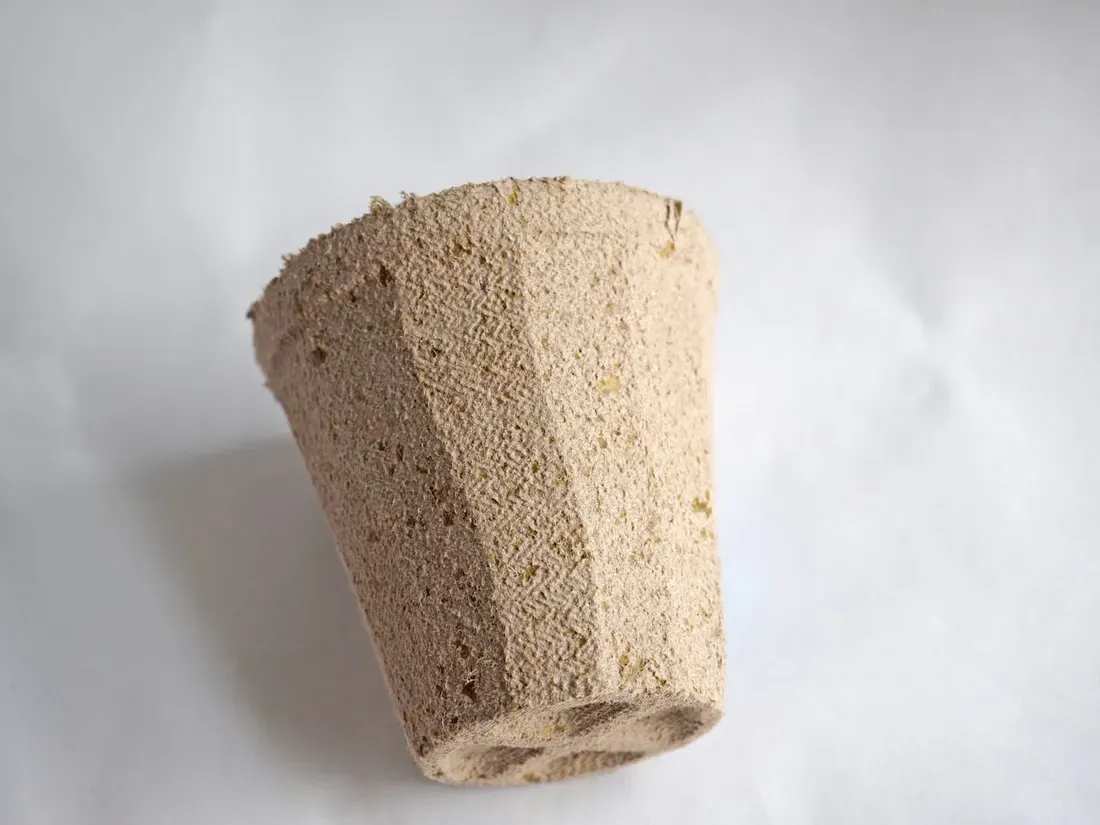
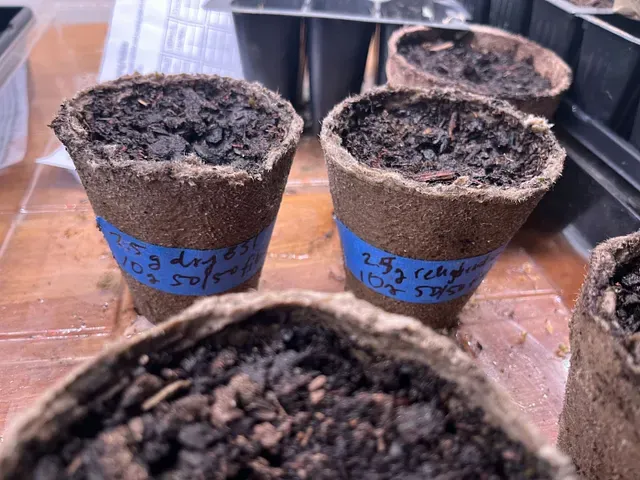
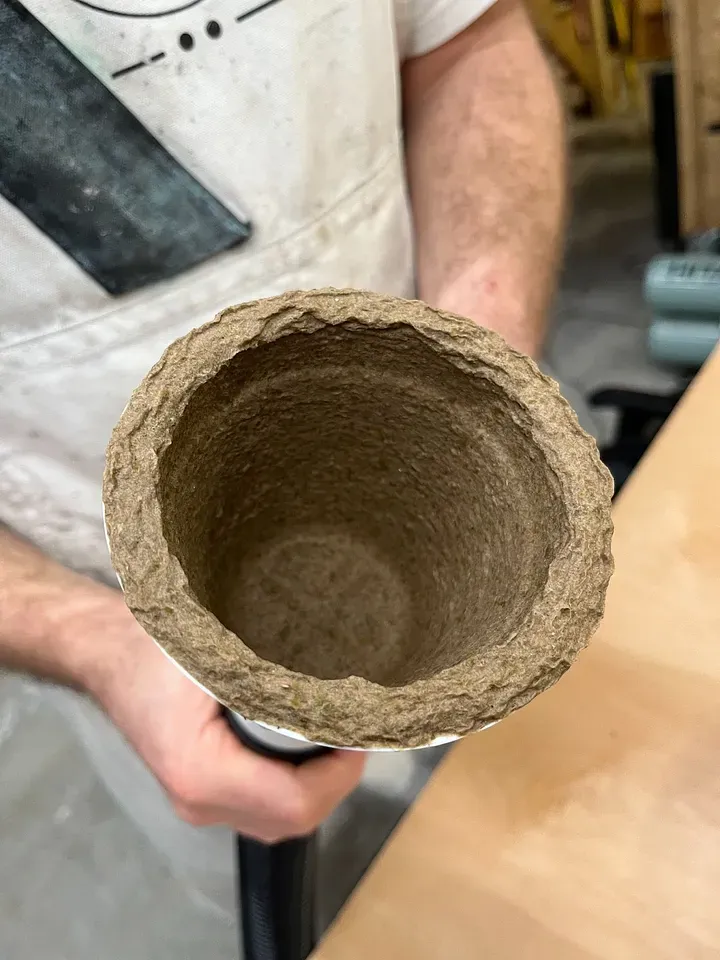
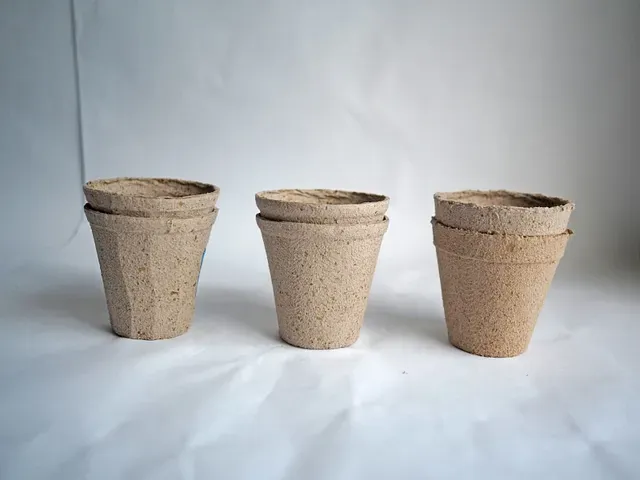
Molded seaweed planter pots. Testing out different designs. Photo: Fun Stuff Design.
We went to work designing the form in CAD. Experimenting with draft angles, wall thicknesses, and gave the bottom of the pot some structure with a place for the user to poke drain holes. We designed the pot with seaweed-inspired flair, a nod to Emily’s seaweed-driven mission.
After a quick 3d print to check everything, we went to work on the mold, designing a new lattice structure that could accommodate the shape of the planter. With this kind of construction, not only does the mold need to perform, but you have to be able to take the product off of the mold. The first part is easy, the second part takes an experienced hand. This is where our team’s extensive mold-making experience really shone.
But there was still one problem, we had yet to actually grow anything in the pots.
Proving performance.
As we were fabricating and shipping 50 testing prototypes to Ocean Made, we designed a study to really test the effectiveness of the pots.
Emily is a prolific gardener. We could see it every time we talked on Zoom — a floor to ceiling wall of plants. We were impressed as she set up a series of grow-cabinets that she could use to start seeds in the prototype biopots — enough space that we would have enough test plants to show some statistical significance.
She set up a nursery and started tomatoes, some of the most sensitive garden plants, and tracked them for 120 days-the full time required for tomatoes to reach maturity. We decided to include plastic pots, the coco coir incumbent pots, and paper pots without seaweed to test alongside the prototype Kelp Pots.
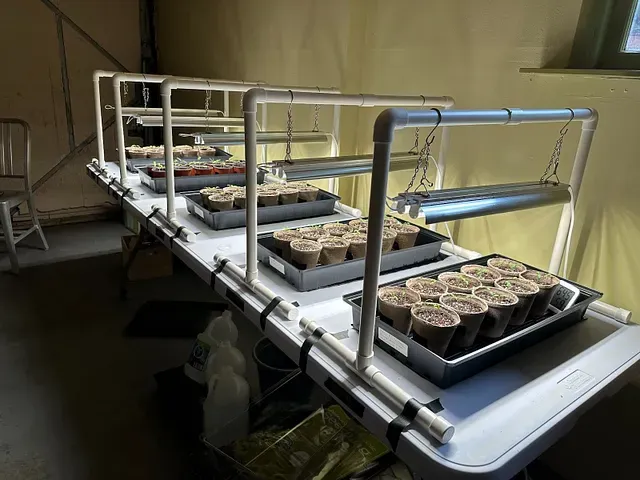
Starting tomato seedings in plastic, coco-coir, plain paper, and seaweed paper pots. Photo: Ocean Made.
We went into the study with a few hypothesis. Seaweed has a good track record in supporting plant growth as a fertilizer, a source of micro nutrients, and as a water retention aid in the soil. We expected that the seaweed would be able to release beneficial nutrients, and likely help the pots retain more moisture.
We also theorized that the seaweed particles might act as a hydrolysable link, creating weak spots that roots could exploit, helping them break through the pots and into the nutrient rich soil. If it worked, the Kelp Pots might be able to prevent plants from becoming root bound, a common issue with plastic and existing biopots, where roots, when they cannot grow beyond the planter, grow into a dense, tangled mass that ultimately prevents growth.
We also thought the seaweed particles, when hydrated, would create weak spots that roots could use to break through the pots and access the nutrient-rich soil. If true, the Kelp Pots would help prevent plants from becoming root bound. Root binding is a common problem with plastic and current biopots, where roots can’t grow past the container and instead form a dense, tangled mass that stops the plant from growing.
If successful the Kelp Pots would address several key challenges:
The first 60 days: roots vs: shoots
In the first phase of the test, before transplanting, it initially looked like the bio-pots were lagging behind. Around the 20-day mark, the tomato seedlings in the plastic pots appeared to be outclassing the others growing taller, with more leaf growth.
It wasn’t all that surprising. We live in a world where synthetic materials generally outclass natural materials on everything from price to durability and performance, but we knew it wasn’t over yet.
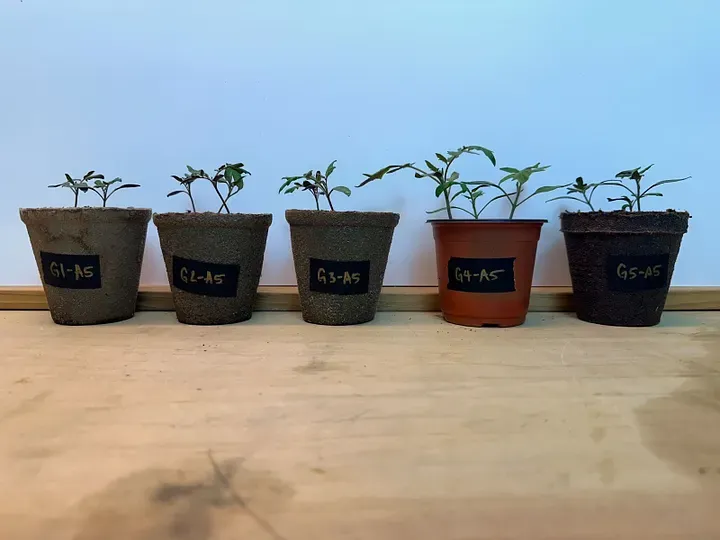
The plants in the plastic pots were growing faster in the beginning. Photo: Ocean Made.
At around day 45 the plants were transplanted from their nursery into the soil. For the plants growing in plastic it meant that they were removed from their pots. The others in bio-pots were planted directly into the soil.
We didn’t know it at the time, but the planting at 45 days was decisive moment in the study. By day 60 we could see results:
Plastic Pots: Suffered major transplant shock and took nearly 3 weeks to show any new growth.
Peat/Coir Pots: Remained stalled; their roots struggled to break through the tough container walls.
Kelp Pots: Were the first to show clear signs of rebounding. The roots were resilient and the pot degraded effectively, growth never stopped.
So while the plastic pots seemed to perform better at first — they were showing more visible growth — t he Kelp Pots’ performance included less obvious benefits, like avoiding shocks to the plants and promoting the growth of strong root systems.
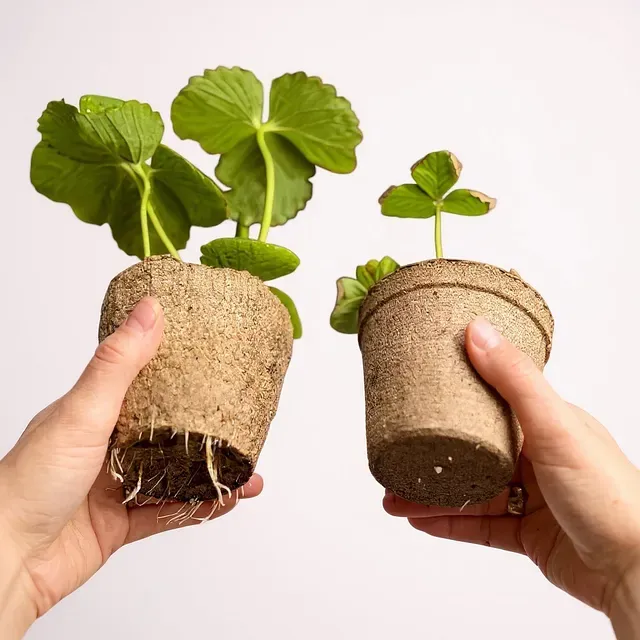
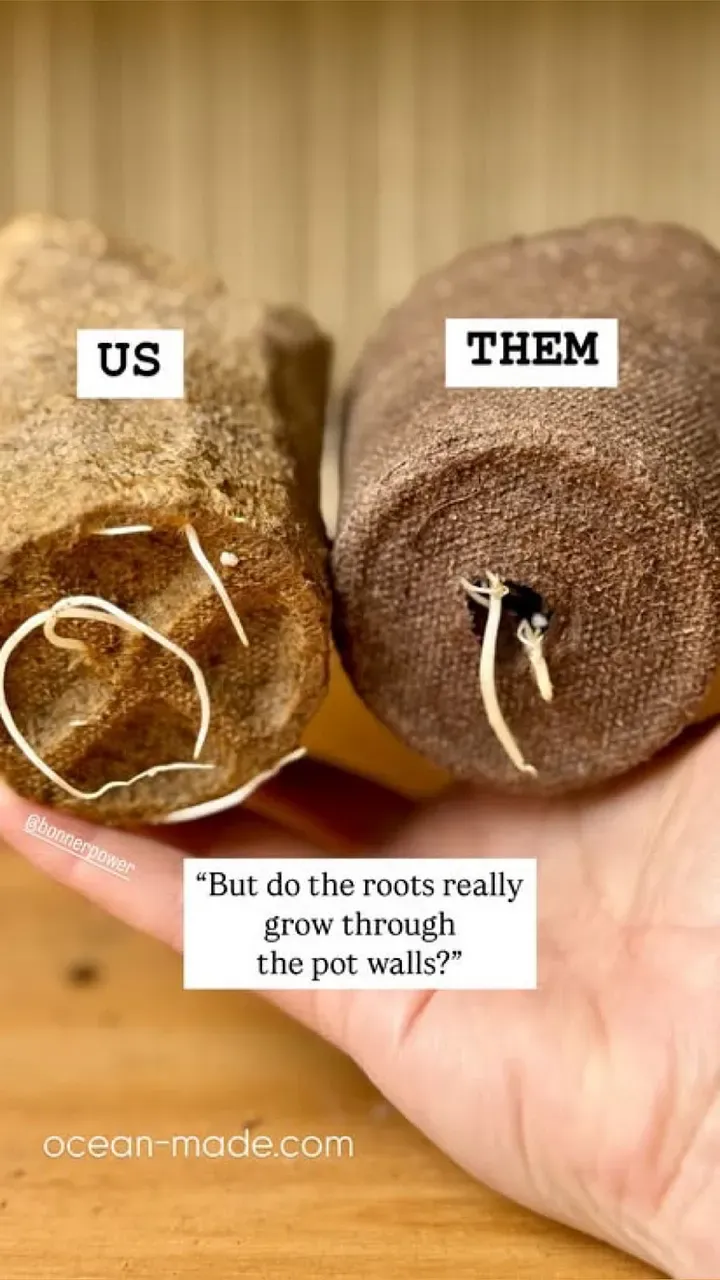
Roots were more successful at growing through the plant walls of the seaweed paper pots. Photo: Ocean Made.
A clear winner
Yield: Plants in Kelp Pots produced twice as many tomatoes as those in plastic pots, and nearly 8–10x as many as those in peat pots.
Quality: The tomatoes from the Kelp Pot group were more evenly sized and shaped.
Plant Health: The Kelp Pot plants had stockier stems (crucial for support), more branching shoots (at least 2 per sample vs. only 1 for competitors), and far more buds.
When Emily pulled the tomato plants out of the ground, the difference was visible in the roots too. The Kelp Pot plants had significantly larger root systems and greater overall biomass.
The Key takeaway: Kelp Pots created more roots, more shoots, and more fruits.
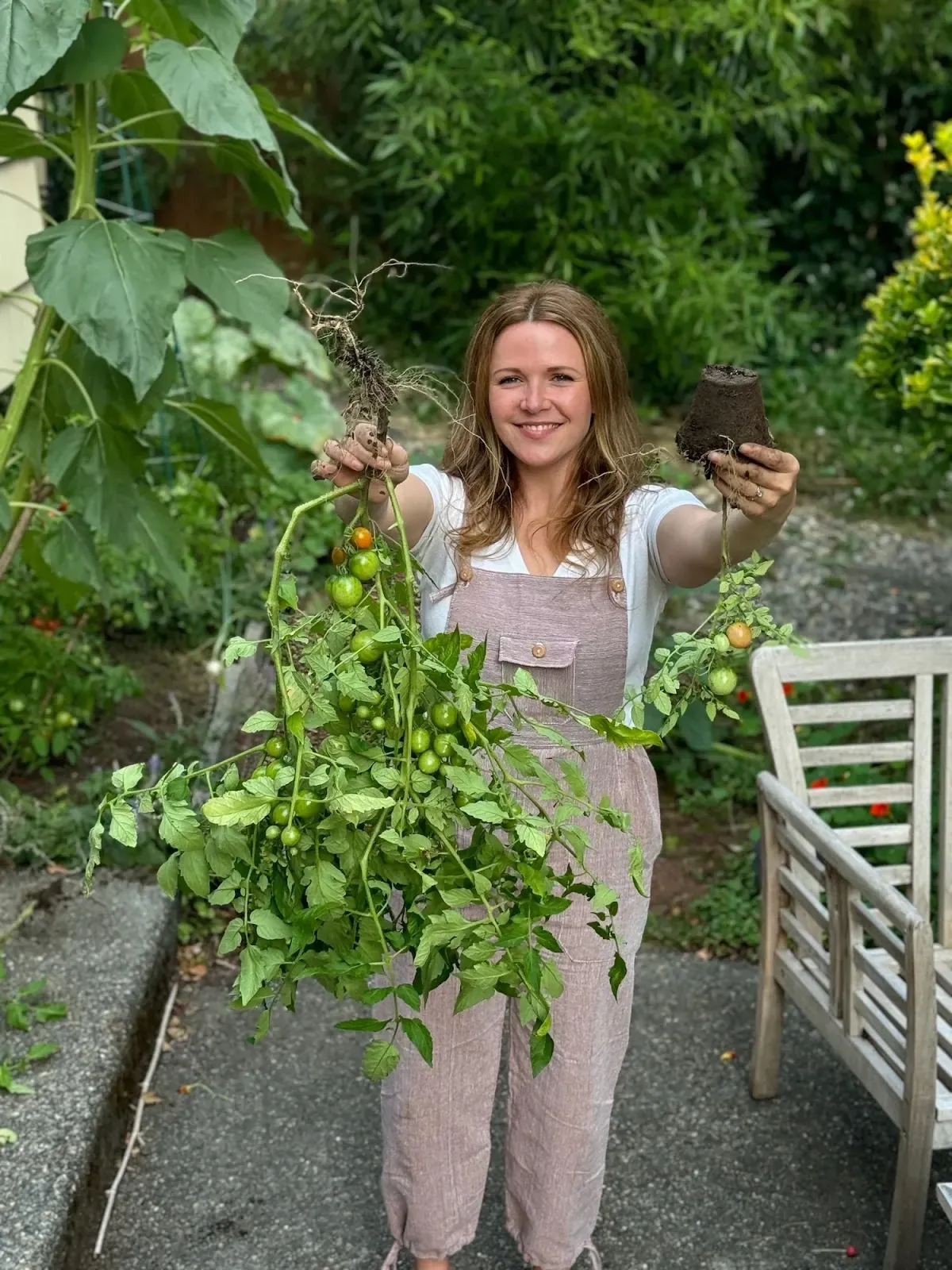
Emily, the founder of Ocean Made, showing off the results. Kelp Pots grow bigger plants. Photo: Ocean Made.
It became clear that this product was really going to work, not just because of its ingredients but because of its performance. Emily connected with a contract manufacturer who knew paper pulp, could operate at a scale that made sense, and most importantly were willing to try something new.
Armed with concrete data, Emily launched a successful presale for her “Kelp Pots.” The project finally transformed from a series of experiments into the foundation of a viable, consumer-facing product: Kelp Pots.
The lesson is clear: Storytelling and sustainability open doors, but commercial success only came when we solved a concrete problem with demonstrable, functional benefits.
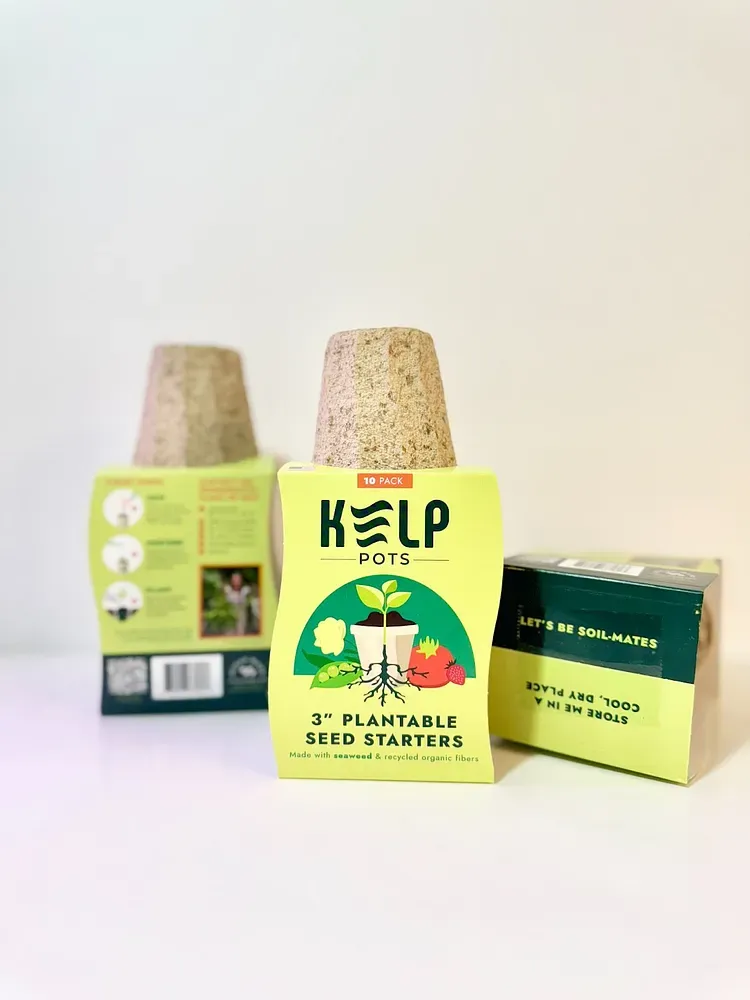
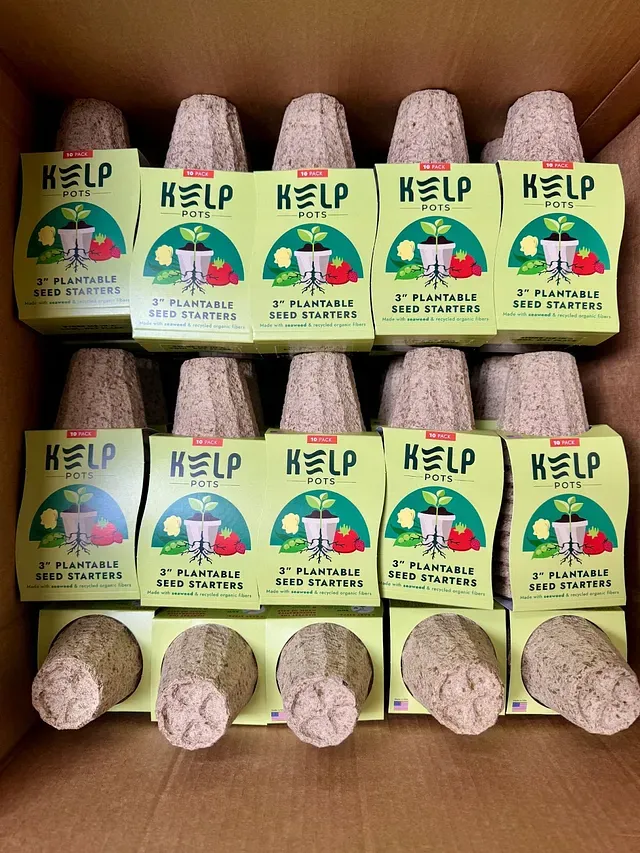
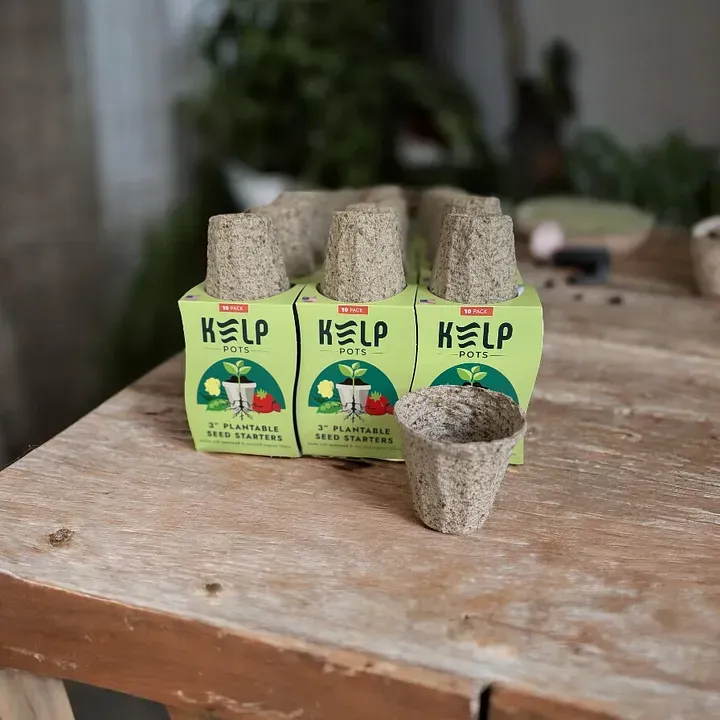
Kelp Pots in their packaging. Photo: Ocean Made.
https://oceanmade.co/products/kelp-pots-10-pack
Update: Iterating for the Market
Since the initial work and testing Emily and her team have continued to refine the product for commercial viability. It turned out that our initial wavy design decomposed faster than was ideal, so one of the first iterations was to adjust the recipe and physical design to fine-tune decomposition rates, structural integrity, water retention and further improve cost of goods sold (COGS)
Today the Ocean Made team is prototyping new form factors, including Cell Trays and 4” square pots.
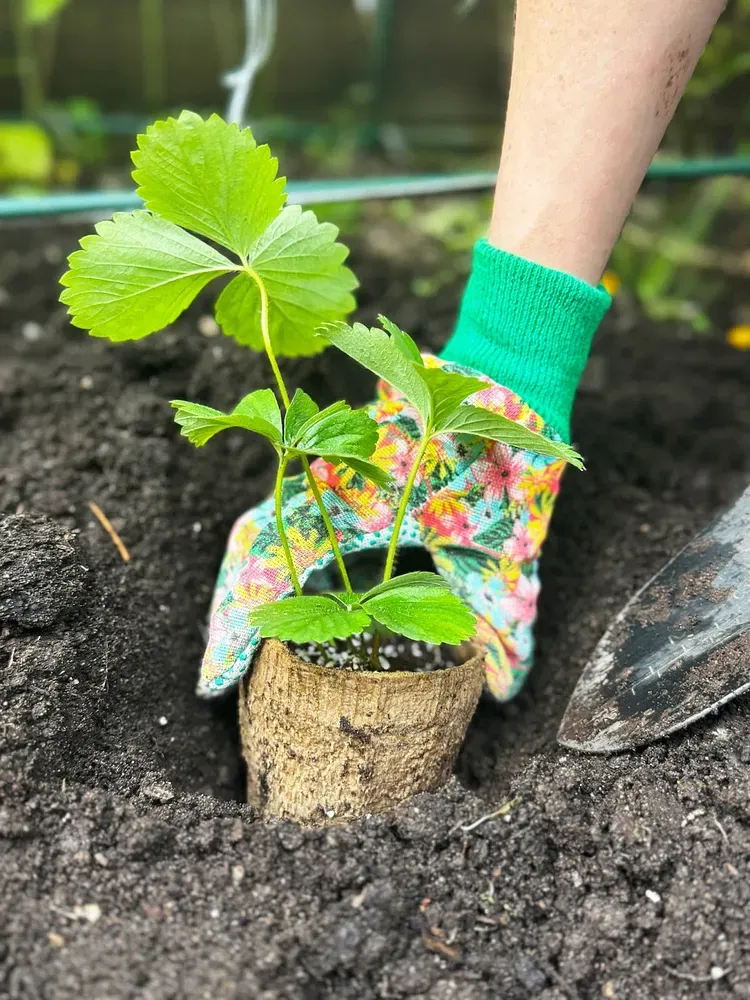
Planting strawberries in Kelp Pots. Photo: Ocean Made.
A Biomaterials Commercialization Playbook
This journey wasn’t a lucky break; it was a process. This is how our two studios work together to de-risk material innovation for our clients.
Fun Stuff Design (Julian Goldman & Dierdre Shea) We are your hands-on R&D and design partners. We build the prototypes, solve the physical problems, draw parallels between design and storytelling, and turn raw bio-based materials into beautiful, desirable, and manufacturable products.
Keep Earth Company (Aaron Nesser) We are your market-facing strategists. We do the math, design the studies, and help align innovation with commercial and venture capital markets to give biomaterials a viable commercial home.
The Vision: Turn a massive seaweed surplus into a sustainable material
Tools & Techniques
- In -house vacuum molding system
- 3D-Printed tooling
- Detailed techno-economic cost modeling
- Product design rooted in manufacturing, performance, user testing and storytelling
Have a novel material or a “missing market” problem?
We’re always looking for our next challenge. If you’re a founder, scientist, or R&D team looking to turn a new material into a real-world product, let’s talk.
Get in touch with Fun Stuff Design
Huge thanks to Emily Powers and the Ocean Made team for working with us to develop Kelp Pots, James Dillard who helped connect the dots, and who, with the Macro Oceans team supported the development of the seaweed paper packaging, Greenwave for sourcing and supplying the range of seaweeds we tested, and Bren Smith and Julia Marsh for the podcast-sourced inspiration that helped get these projects started.
'%3e%3cg%20filter='url(%23filter0_f_869_606)'%3e%3cpath%20d='M-67.5117%20414.299C-67.5117%20414.299%20425.283%20285.213%20734.889%20285C1046.2%20284.786%201515.31%20414.299%201515.31%20414.299V584.749H-67.5117V414.299Z'%20fill='%2301295D'/%3e%3c/g%3e%3cg%20filter='url(%23filter1_f_869_606)'%3e%3cpath%20d='M-217%20499.89C-217%20499.89%20366.141%20349.165%20732.507%20348.916C1100.9%20348.666%201656%20499.89%201656%20499.89V698.916H-217V499.89Z'%20fill='%231D6CE2'/%3e%3c/g%3e%3cg%20filter='url(%23filter2_f_869_606)'%3e%3cpath%20d='M-217%20528.323C-217%20528.323%20366.141%20399.13%20732.507%20398.916C1100.9%20398.702%201656%20528.323%201656%20528.323V698.916H-217V528.323Z'%20fill='%23D9980C'/%3e%3c/g%3e%3cg%20filter='url(%23filter3_f_869_606)'%3e%3cpath%20d='M-217%20542.539C-217%20542.539%20366.141%20424.112%20732.507%20423.916C1100.9%20423.72%201656%20542.539%201656%20542.539V698.916H-217V542.539Z'%20fill='%23D94D0C'/%3e%3c/g%3e%3cg%20filter='url(%23filter4_f_869_606)'%3e%3cpath%20d='M-157%20557.913C-157%20557.913%20388.78%20470.061%20731.674%20469.916C1076.46%20469.77%201596%20557.913%201596%20557.913V673.916H-157V557.913Z'%20fill='%231C1C1C'/%3e%3c/g%3e%3cpath%20d='M-157%20643.913C-157%20643.913%20388.78%20556.061%20731.674%20555.916C1076.46%20555.77%201596%20643.913%201596%20643.913V759.916H-157V643.913Z'%20fill='%231C1C1C'/%3e%3c/g%3e%3cdefs%3e%3cfilter%20id='filter0_f_869_606'%20x='-307.512'%20y='45'%20width='2062.82'%20height='779.749'%20filterUnits='userSpaceOnUse'%20color-interpolation-filters='sRGB'%3e%3cfeFlood%20flood-opacity='0'%20result='BackgroundImageFix'/%3e%3cfeBlend%20mode='normal'%20in='SourceGraphic'%20in2='BackgroundImageFix'%20result='shape'/%3e%3cfeGaussianBlur%20stdDeviation='60'%20result='effect1_foregroundBlur_869_606'/%3e%3c/filter%3e%3cfilter%20id='filter1_f_869_606'%20x='-457'%20y='108.916'%20width='2353'%20height='830'%20filterUnits='userSpaceOnUse'%20color-interpolation-filters='sRGB'%3e%3cfeFlood%20flood-opacity='0'%20result='BackgroundImageFix'/%3e%3cfeBlend%20mode='normal'%20in='SourceGraphic'%20in2='BackgroundImageFix'%20result='shape'/%3e%3cfeGaussianBlur%20stdDeviation='60'%20result='effect1_foregroundBlur_869_606'/%3e%3c/filter%3e%3cfilter%20id='filter2_f_869_606'%20x='-317'%20y='298.916'%20width='2073'%20height='500'%20filterUnits='userSpaceOnUse'%20color-interpolation-filters='sRGB'%3e%3cfeFlood%20flood-opacity='0'%20result='BackgroundImageFix'/%3e%3cfeBlend%20mode='normal'%20in='SourceGraphic'%20in2='BackgroundImageFix'%20result='shape'/%3e%3cfeGaussianBlur%20stdDeviation='25'%20result='effect1_foregroundBlur_869_606'/%3e%3c/filter%3e%3cfilter%20id='filter3_f_869_606'%20x='-317'%20y='323.916'%20width='2073'%20height='475'%20filterUnits='userSpaceOnUse'%20color-interpolation-filters='sRGB'%3e%3cfeFlood%20flood-opacity='0'%20result='BackgroundImageFix'/%3e%3cfeBlend%20mode='normal'%20in='SourceGraphic'%20in2='BackgroundImageFix'%20result='shape'/%3e%3cfeGaussianBlur%20stdDeviation='25'%20result='effect1_foregroundBlur_869_606'/%3e%3c/filter%3e%3cfilter%20id='filter4_f_869_606'%20x='-257'%20y='369.916'%20width='1953'%20height='404'%20filterUnits='userSpaceOnUse'%20color-interpolation-filters='sRGB'%3e%3cfeFlood%20flood-opacity='0'%20result='BackgroundImageFix'/%3e%3cfeBlend%20mode='normal'%20in='SourceGraphic'%20in2='BackgroundImageFix'%20result='shape'/%3e%3cfeGaussianBlur%20stdDeviation='25'%20result='effect1_foregroundBlur_869_606'/%3e%3c/filter%3e%3cclipPath%20id='clip0_869_606'%3e%3crect%20width='1440'%20height='638'%20fill='white'/%3e%3c/clipPath%3e%3c/defs%3e%3c/svg%3e)