The sticker-patch that couldn't be done, but was
From mom with an idea to founder with a product: how New New Patch became a peel-and-stick repair that actually works on kids' cotton clothes.


How do you invent a product everyone says can’t be done
When Prue Linehan set out to create New New Patch, she wasn’t trying to reinvent clothing repair. She was just trying to save her son’s blueberry-stained T-shirt.
Like many parents, she found herself throwing away perfectly good kids’ clothes. Not because they were worn out, but because they had a stain, an outdated graphic, or had simply fallen out of favour. She searched for a quick fix. Sew-on patches took too much effort, especially for a new mom. Iron-on patches needed heat and felt stiff. Peel-and-stick patches already existed, but they were designed for synthetic outdoor gear, not soft cotton kids’ clothes, and still required 15 mins of heat to set.
There wasn’t a product that solved the problem parents actually had, one that worked around the time and energy they didn’t have. So she decided to build one.
“I wasn’t trying to invent a new category,” Prue says. “I just wanted to make it easier to fix than to replace so we’d stop throwing away perfectly good kids’ clothes.”
There was just one issue. According to the experts, it couldn’t be done.
“It doesn’t exist”
Prue started where most founders would: by asking the experts. Material consultants. Adhesive specialists. Manufacturers. Distributors.
She cold called everyone and the answers were discouraging. One consultant laughed and suggested duct tape. Another refused to even search for an adhesive. Others explained that peel-and-stick simply wasn’t designed for cotton because everything on the market assumed clothing patches needed thread or heat to bond.
The message was clear: if the product existed, someone would already be making it. Prue wasn’t convinced. She believed the product was possible and that perfectly good kids’ clothes deserved saving.
Finding the right partner
Eventually Prue was introduced to Aaron Nesser from Keep Earth Company, a former material-science founder known for navigating the myriad challenges that early stage startups encounter.
Instead of treating it like an impossible idea, Aaron treated it like a materials problem waiting to be solved. Prue had already sourced dozens of adhesive samples but without a materials science background, she didn’t know what she was looking for, if other better options existed, and what the spec sheets were telling her. Aaron did.
“I’m a mom trying to solve a problem,” Prue says.
Together they scoured the landscape of novel, biobased, and existing adhesive solutions, navigating specifications full of disparate performance tests that often couldn’t be compared between different manufacturers. Through this process, they screened 45 different adhesive chemistries, and narrowed them down to 17 candidates.
The goal wasn’t simply to find an adhesive. They needed one that could bond to cotton, survive repeated washing, remain soft and flexible, be suitable for children’s clothing, and work without heat or thread. There was no specification sheet with the information they needed. The only way to find the answer was to test. So they built their own testing protocol and let thousands of wash cycles reveal what the data alone couldn’t.
Building a laboratory at home
Professional materials testing wasn’t financially realistic, so they built a testing system that could run from Prue’s Brooklyn living room. A bathroom scale ensured every patch was applied with identical pressure, old toddler clothes became test garments, the washing machine became the test chamber, and a Sharpie tracked every wash cycle.
Over months of testing, Prue ran thousands of wash cycles across dozens of adhesive and material combinations. Laundry day became product development. Every failed patch narrowed the search. Every successful wash brought them closer.
Over months of testing, Prue logged tens of thousands of individual wash tests. “There were so many moments where I thought, ‘Maybe the experts were right,’” Prue says. “But every failed test taught us something, and once we had a way to compare materials consistently, I couldn’t stop. I knew we were getting closer.”
Eventually, after thousands of washes, dozens of material combinations, and countless failed prototypes, they found it.
The adhesive they’d been searching for.
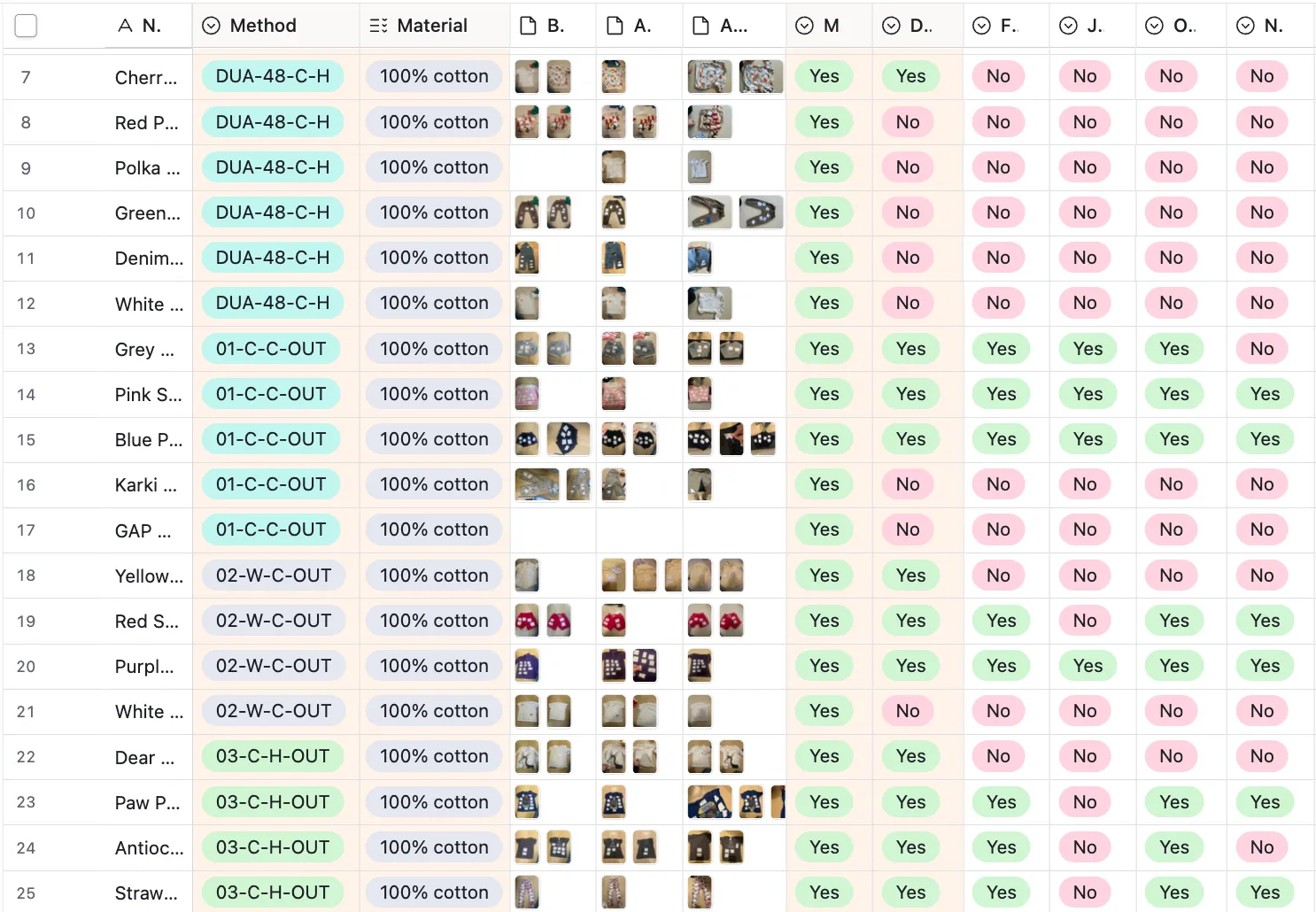
Organizing some of the many samples in Airtable. © New New Patch, used with permission
The problems nobody predicts
Just when they thought they had found the answer, another problem appeared.
They’d found the adhesive, but it had a habit of preferring the wrong surface. Instead of transferring cleanly from the release liner to the cotton t-shirt, it often stuck to fingertips first.
Solving the next challenge meant redesigning the entire patch construction and finding a new manufacturing process. What looked like the finish line became another round of iteration.
Around the same time, Prue returned to full-time work, and development slowed. For a while, it looked like the experts had been right. But by then, Aaron had helped her understand the science well enough to keep moving the project forward herself.
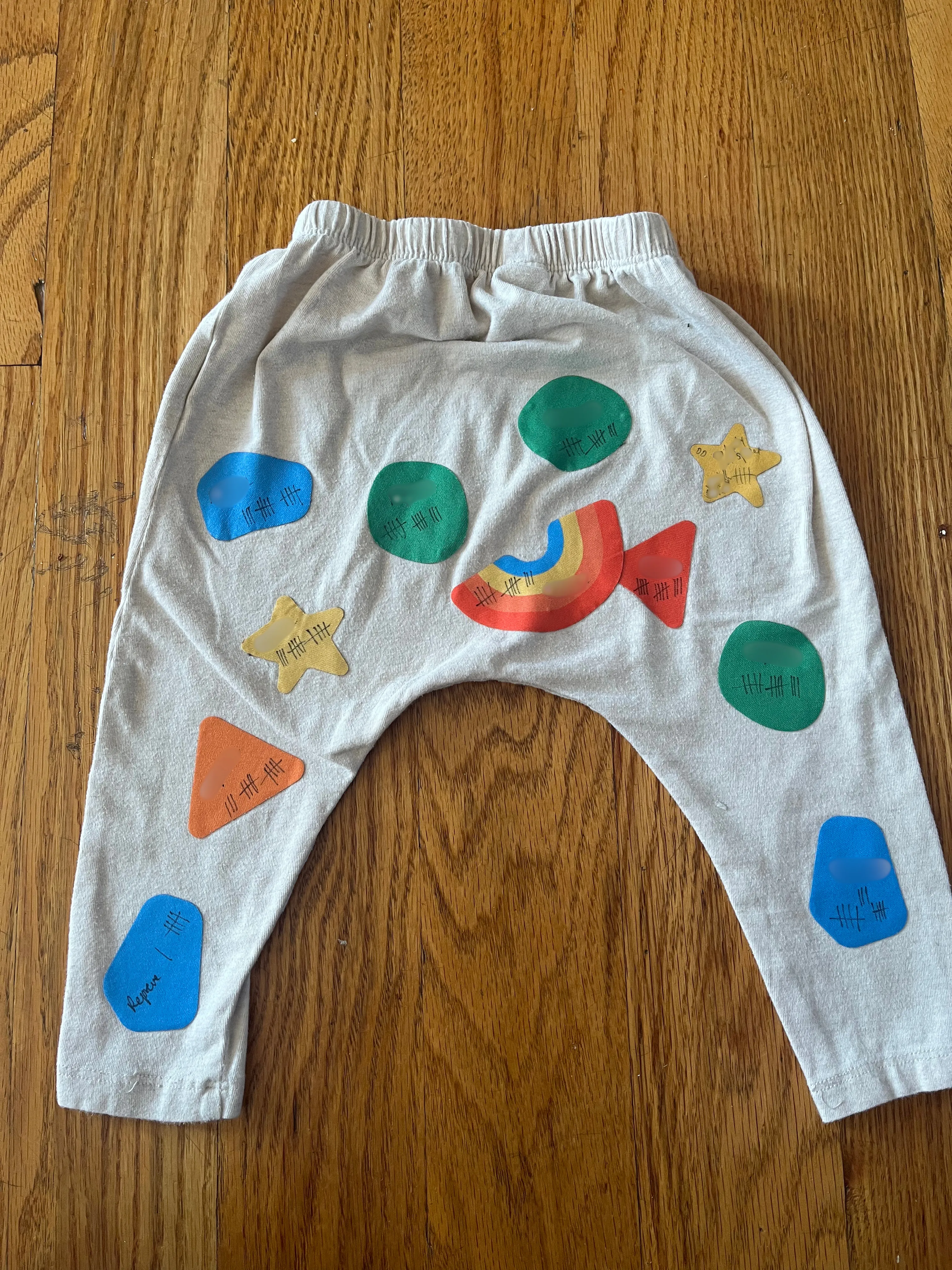
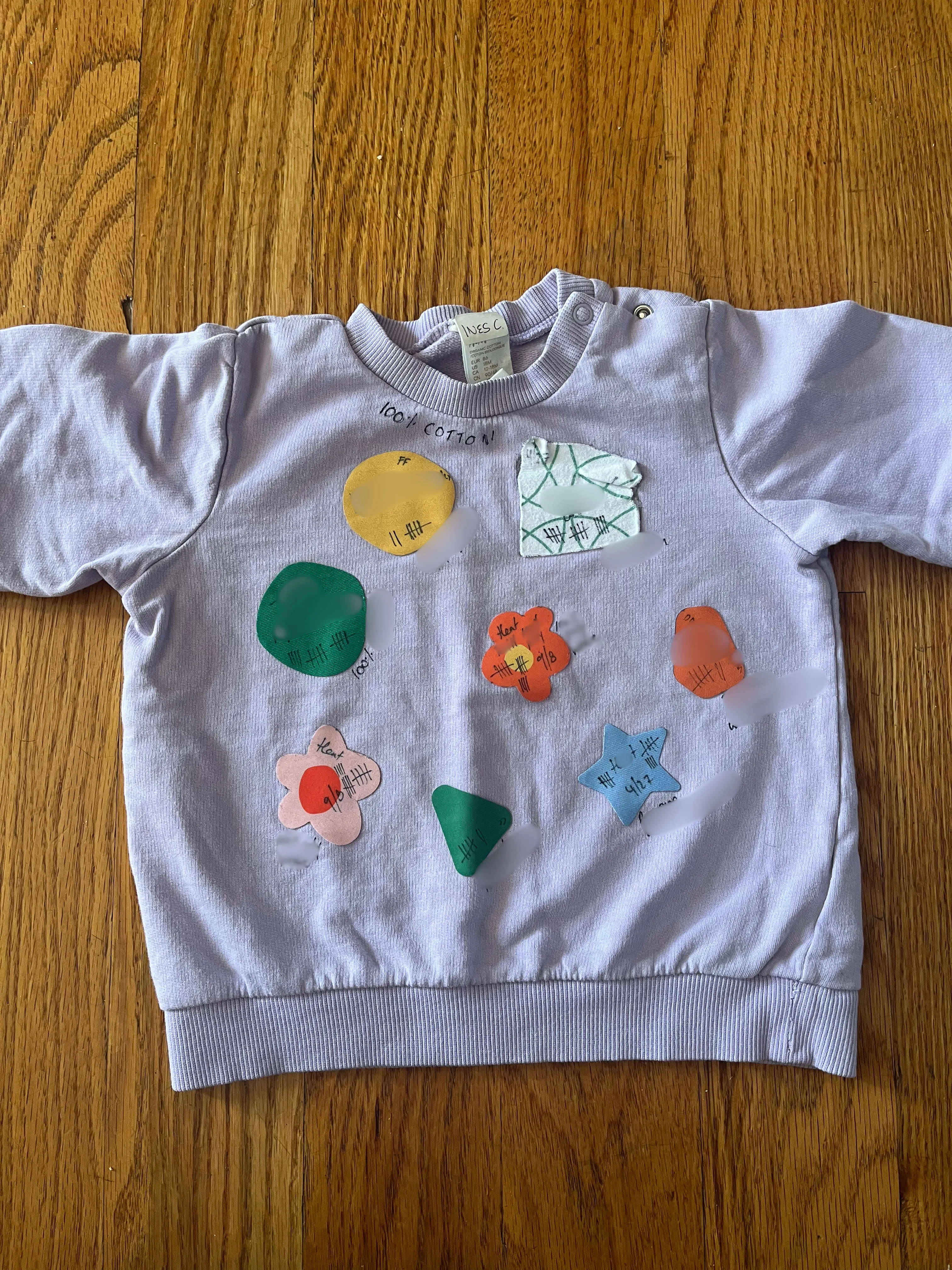
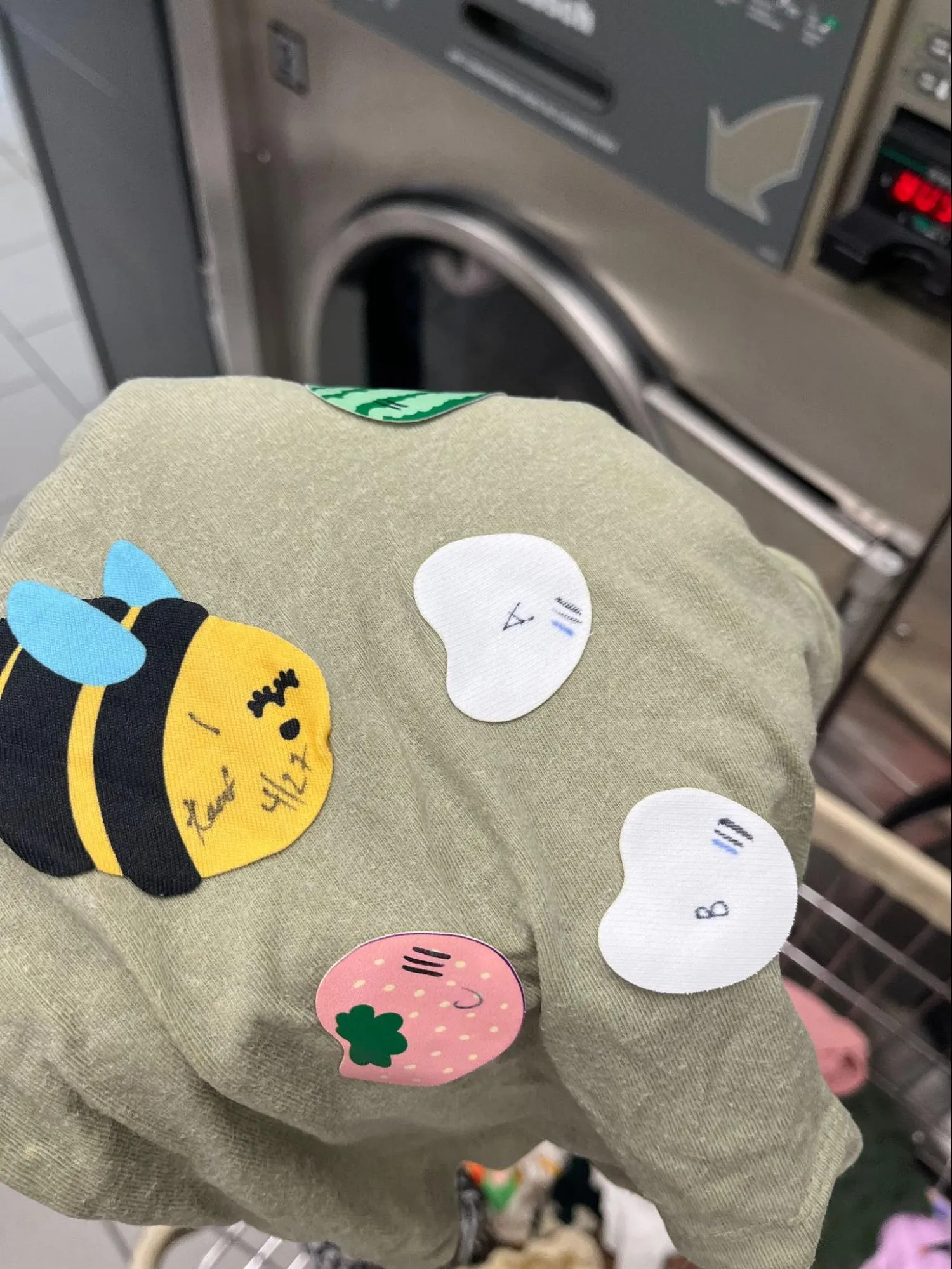
We tested every sample on real kids clothes, keeping track of the different adhesives, patch materials and fabric types. © New New Patch, used with permission
The breakthrough
After years of iteration, the final combination emerged: a washable peel-and-stick fabric patch that works on cotton without sewing or ironing that withstands multiple wash cycles.
It’s a Frankenstein product in the cutest possible way.
The product didn’t exist because no one had been willing to solve the combination of problems together.
“It’s a Frankenstein product in the cutest possible way,” Prue says. “Every material is there for a reason. It took years to find the right combination—and the right partners—to bring it to life. Together, they solve one very simple problem.”
Today, Sticker Patches help families keep perfectly good kids’ clothes in circulation for longer, giving stained garments another chance before they’re replaced. For parents, they save time and money. For clothing, they extend useful life. For the planet, they mean fewer perfectly good garments heading to landfill.
More than a Sticker Patch
The biggest lesson wasn’t about adhesives. It was about persistence.
Every dead end became another experiment, and every failed prototype generated another piece of knowledge. The experts weren’t wrong, the problem really was difficult. It just wasn’t impossible.
Today, New New Patch is available online and stocked by independent retailers across New York. Soon it will expand into custom collaborations with retailers, museums, brands, and licensors, helping families personalize and extend the life of the clothes they already own.
Because sometimes innovation doesn’t begin in a laboratory. Sometimes it begins with a blueberry stain on a toddler’s T-shirt.
Get involved
Ready to try sticker patches? See how others are using them and find the latest designs by following New New Patch on Instagram, or shop the full collection online at newnewpatch.com and in stores at Parachute Brooklyn, Owl Tree Kid, Cosmo Brooklyn, Funny Goose, Wondermart, Thistle & Poppy, Growing Ivy, Funky Monkey and Ah Baby Co.
Interested in custom patches for your organization? Reach out online
Working on your own “this doesn’t exist yet” product?
That’s exactly the kind of challenge we love at Keep Earth Company. Get in touch here to start a conversation.
'%3e%3cg%20filter='url(%23filter0_f_869_606)'%3e%3cpath%20d='M-67.5117%20414.299C-67.5117%20414.299%20425.283%20285.213%20734.889%20285C1046.2%20284.786%201515.31%20414.299%201515.31%20414.299V584.749H-67.5117V414.299Z'%20fill='%2301295D'/%3e%3c/g%3e%3cg%20filter='url(%23filter1_f_869_606)'%3e%3cpath%20d='M-217%20499.89C-217%20499.89%20366.141%20349.165%20732.507%20348.916C1100.9%20348.666%201656%20499.89%201656%20499.89V698.916H-217V499.89Z'%20fill='%231D6CE2'/%3e%3c/g%3e%3cg%20filter='url(%23filter2_f_869_606)'%3e%3cpath%20d='M-217%20528.323C-217%20528.323%20366.141%20399.13%20732.507%20398.916C1100.9%20398.702%201656%20528.323%201656%20528.323V698.916H-217V528.323Z'%20fill='%23D9980C'/%3e%3c/g%3e%3cg%20filter='url(%23filter3_f_869_606)'%3e%3cpath%20d='M-217%20542.539C-217%20542.539%20366.141%20424.112%20732.507%20423.916C1100.9%20423.72%201656%20542.539%201656%20542.539V698.916H-217V542.539Z'%20fill='%23D94D0C'/%3e%3c/g%3e%3cg%20filter='url(%23filter4_f_869_606)'%3e%3cpath%20d='M-157%20557.913C-157%20557.913%20388.78%20470.061%20731.674%20469.916C1076.46%20469.77%201596%20557.913%201596%20557.913V673.916H-157V557.913Z'%20fill='%231C1C1C'/%3e%3c/g%3e%3cpath%20d='M-157%20643.913C-157%20643.913%20388.78%20556.061%20731.674%20555.916C1076.46%20555.77%201596%20643.913%201596%20643.913V759.916H-157V643.913Z'%20fill='%231C1C1C'/%3e%3c/g%3e%3cdefs%3e%3cfilter%20id='filter0_f_869_606'%20x='-307.512'%20y='45'%20width='2062.82'%20height='779.749'%20filterUnits='userSpaceOnUse'%20color-interpolation-filters='sRGB'%3e%3cfeFlood%20flood-opacity='0'%20result='BackgroundImageFix'/%3e%3cfeBlend%20mode='normal'%20in='SourceGraphic'%20in2='BackgroundImageFix'%20result='shape'/%3e%3cfeGaussianBlur%20stdDeviation='60'%20result='effect1_foregroundBlur_869_606'/%3e%3c/filter%3e%3cfilter%20id='filter1_f_869_606'%20x='-457'%20y='108.916'%20width='2353'%20height='830'%20filterUnits='userSpaceOnUse'%20color-interpolation-filters='sRGB'%3e%3cfeFlood%20flood-opacity='0'%20result='BackgroundImageFix'/%3e%3cfeBlend%20mode='normal'%20in='SourceGraphic'%20in2='BackgroundImageFix'%20result='shape'/%3e%3cfeGaussianBlur%20stdDeviation='60'%20result='effect1_foregroundBlur_869_606'/%3e%3c/filter%3e%3cfilter%20id='filter2_f_869_606'%20x='-317'%20y='298.916'%20width='2073'%20height='500'%20filterUnits='userSpaceOnUse'%20color-interpolation-filters='sRGB'%3e%3cfeFlood%20flood-opacity='0'%20result='BackgroundImageFix'/%3e%3cfeBlend%20mode='normal'%20in='SourceGraphic'%20in2='BackgroundImageFix'%20result='shape'/%3e%3cfeGaussianBlur%20stdDeviation='25'%20result='effect1_foregroundBlur_869_606'/%3e%3c/filter%3e%3cfilter%20id='filter3_f_869_606'%20x='-317'%20y='323.916'%20width='2073'%20height='475'%20filterUnits='userSpaceOnUse'%20color-interpolation-filters='sRGB'%3e%3cfeFlood%20flood-opacity='0'%20result='BackgroundImageFix'/%3e%3cfeBlend%20mode='normal'%20in='SourceGraphic'%20in2='BackgroundImageFix'%20result='shape'/%3e%3cfeGaussianBlur%20stdDeviation='25'%20result='effect1_foregroundBlur_869_606'/%3e%3c/filter%3e%3cfilter%20id='filter4_f_869_606'%20x='-257'%20y='369.916'%20width='1953'%20height='404'%20filterUnits='userSpaceOnUse'%20color-interpolation-filters='sRGB'%3e%3cfeFlood%20flood-opacity='0'%20result='BackgroundImageFix'/%3e%3cfeBlend%20mode='normal'%20in='SourceGraphic'%20in2='BackgroundImageFix'%20result='shape'/%3e%3cfeGaussianBlur%20stdDeviation='25'%20result='effect1_foregroundBlur_869_606'/%3e%3c/filter%3e%3cclipPath%20id='clip0_869_606'%3e%3crect%20width='1440'%20height='638'%20fill='white'/%3e%3c/clipPath%3e%3c/defs%3e%3c/svg%3e)